


Categories:
Categories:
WHAT ANTI-RISE ACTUALLY MEANS
Anti-rise is one of those suspension terms that gets mentioned often, but rarely gets explained in a way that connects back to what you feel on trail. In simple terms, anti-rise describes how braking forces affect the rear suspension of a full suspension bike. Stopping power is not always about how powerful your brakes are. It is about what happens to the bike’s chassis when you are slowing down, especially when you are braking hard into steep, rough, or high-speed terrain.
When you brake, weight naturally transfers forward. The fork compresses, the rider’s mass moves toward the front of the bike, and the rear end becomes lighter. Depending on the suspension layout, the rear suspension can either extend, stay more neutral, or be pulled deeper into its travel as braking forces enter the system. That behaviour changes how stable, active, and predictable the bike feels when you are trying to control speed.
WHY IT MATTERS ON TRAIL
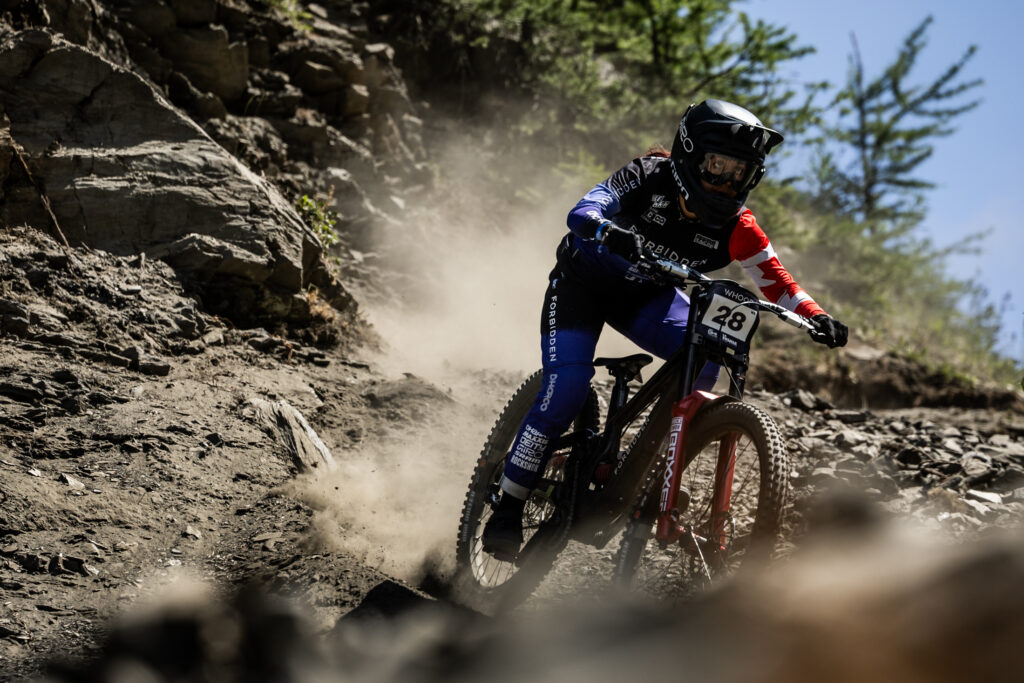
The moments where anti-rise matters most are usually the moments where you have the least room for error. Think about braking into a steep chute, setting up for a catch berm, controlling speed through braking bumps, or dragging brake into a loose corner entry. In those situations, you are not just asking the brakes to slow you down. You are asking the bike to stay composed while the suspension, tires, and rider are all dealing with heavy load transfer.
If the bike pitches forward too much under braking, the rider can feel like they are being pulled over the front of the bike. The rear tire may feel vague or unloaded, and the geometry can feel like it is changing right when you need consistency. On the other side, if braking forces restrict the suspension too heavily, the rear end can feel harsh or less willing to track repeated impacts. Good anti-rise behaviour sits in the useful middle ground: enough support to help maintain chassis stability, without taking away the suspension’s ability to keep working.
HOW WE USE IT
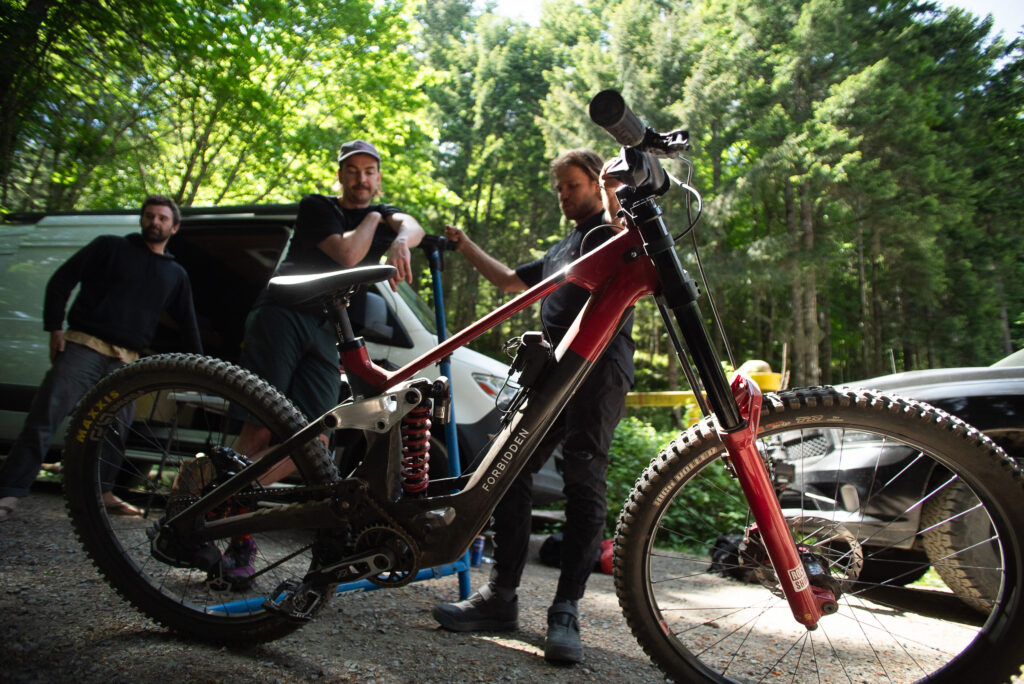
On our Trifecta suspension platforms, anti-rise is part of the bigger ride-feel picture. The high-pivot layout, rearward axle path, rate control linkage, idler position, and proportional geometry all work together to create a bike that stays calm when the trail gets rough and the speed comes up. Anti-rise is one of the tools we use to help maintain that composure when braking loads are high.
The goal is not to chase the highest possible anti-rise number. Bigger is not automatically better. What matters is how the bike behaves through the usable part of its travel and how that behaviour supports the intended ride experience. We want the bike to remain predictable when you are braking late, riding steep terrain, or trying to stay centred through rough corner entries.
THE FORBIDDEN FEEL
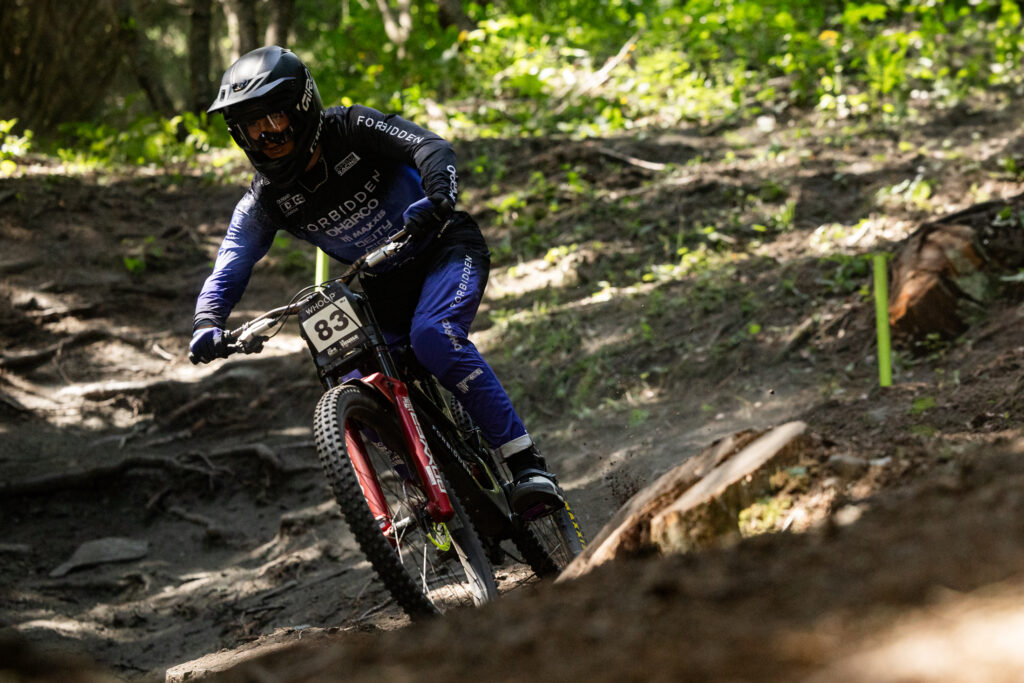
A Forbidden should feel composed without feeling dead. Under braking, that means the bike should help resist excessive pitch and keep the rider in a more useful position between the wheels. When the chassis stays calmer, the rider can make better decisions. You can release the brakes with more confidence, commit to the next line, and let the suspension continue doing its job.
This is especially important on modern bikes because speeds are higher, terrain is rougher, and riders are braking harder than ever. It is also why anti-rise should not be treated as an isolated number. It only makes sense when considered alongside axle path, leverage rate, pedal kickback, geometry, rider position, and the intended use of the bike.
WHAT YOU FEEL AS A RIDER
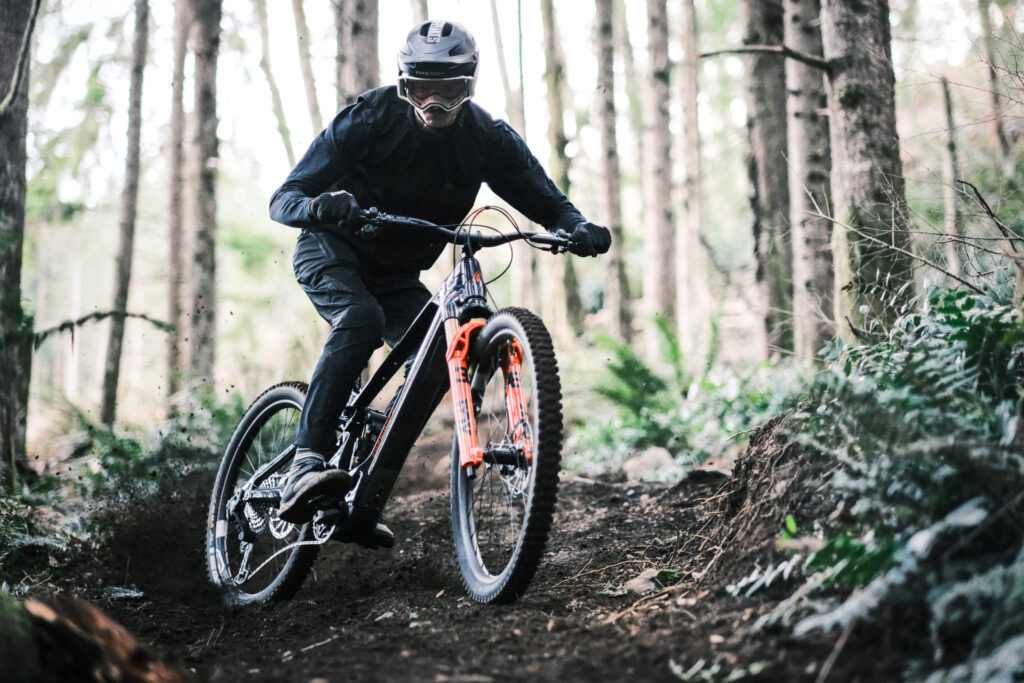
You do not need to understand kinematic graphs to feel anti-rise. You feel it when the bike stays calmer under braking. You feel it when the rear wheel keeps giving you useful feedback instead of feeling nervous or vague. You feel it when you can brake into a steep section without the bike dramatically changing attitude underneath you.
For some riders, that translates to more confidence in steep terrain. For others, it shows up as better corner entry control, more predictable grip, or the ability to brake later without feeling like the bike is getting away from them. However you describe it, the outcome is the same: more control when control matters most.


Share This
Share This